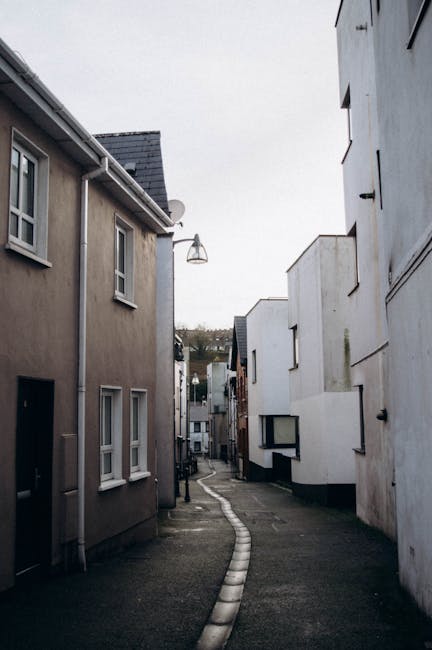
St Helier Estate Moving Guide: Narrow Lanes & Access
Posted on 27/04/2026
St Helier Estate Moving Guide: Narrow Lanes & Access
Moving in St Helier can be straightforward on paper and awkward in real life. Estate roads can be tight, parking can be limited, turning space may be narrow, and a van that looks perfectly manageable on a main road can suddenly feel too large once it reaches the entrance. This St Helier Estate Moving Guide: Narrow Lanes & Access is designed to help you plan sensibly, avoid the common bottlenecks, and move with fewer surprises.
If you are relocating from a flat, a family home, student accommodation, or an office within the area, the main challenge is usually not the loading itself. It is access. The good news is that with the right preparation, the right vehicle choice, and a clear plan for parking, carrying, and timing, even a difficult estate move can be handled smoothly.
Below, you will find practical guidance on access checks, route planning, packing, lifting, property protection, and what to do when space is tight. You will also find useful links to related resources, including packing and boxes support in St Helier, man with a van services in St Helier, and house removals in St Helier for larger moves.

Why St Helier Estate Moving Guide: Narrow Lanes & Access Matters
Access problems are one of the fastest ways to turn a well-organised move into a slow one. In St Helier estates, the obstacles are often predictable: tight corners, parked cars, low-hanging branches, shared entrances, limited visitor bays, and properties where the front door is a long way from the nearest stopping point. None of these are impossible. But they do change the job.
The reason this matters is simple: a move is not just about transporting items from A to B. It is about getting a vehicle close enough to the property, moving items safely between the vehicle and the door, and protecting the building, belongings, and people involved. A sofa can be easy to lift and still be a nightmare to manoeuvre if the lane outside forces an awkward angle. That is where planning makes the difference.
For estate moves, access issues can affect everything:
- the type and size of vehicle you can use
- how much time loading and unloading will take
- whether furniture needs to be dismantled
- how many people should help with lifting
- the risk of damage to walls, floors, kerbs, or item edges
This is also why many people look for local removal support rather than trying to force a one-size-fits-all solution. Services such as removal services in St Helier and a suitable removal van in St Helier are often chosen precisely because the vehicle and loading approach can be matched to the access conditions.
How St Helier Estate Moving Guide: Narrow Lanes & Access Works
In practical terms, moving through narrow lanes is an exercise in matching the route, vehicle, and load to the space available. The process usually starts before moving day, because the most useful decisions are made while you still have time to adjust them.
Here is the basic logic:
- Assess the access - measure or estimate the width of the lane, the turning space, the height limits, and the distance from parking to door.
- Choose the right transport - smaller vehicles are often better for tight estates, even if they require more trips.
- Prepare the load - protect furniture, reduce loose items, and split bulky pieces where possible.
- Plan the carry route - identify steps, gravel, slopes, kerbs, shared entrances, and door swing direction.
- Protect the surroundings - use covers, blankets, floor protection, and careful positioning to reduce scuffs and scratches.
- Load in the right order - keep essential items accessible and heavier items stable.
For many homes, the biggest change is not the move itself but the amount of pre-move sorting. A tight estate is not the place for unnecessary boxes or awkward surplus furniture. If something can be decluttered, sold, donated, recycled, or stored, the move gets easier. Our guide on decluttering before moving is a useful companion read if you want to reduce volume before moving day.
Another practical point: if access is very restricted, a man and van setup may be more efficient than a larger rigid approach. That is why services like man and van in St Helier and removals in St Helier are often considered for estates with awkward vehicle entry points.
Key Benefits and Practical Advantages
Good access planning does more than make the day less stressful. It creates a proper margin for safety and efficiency. That is especially important when the property layout is not forgiving.
The most immediate benefits include:
- Less wasted time because the team is not improvising around avoidable access issues
- Lower damage risk to doors, walls, banisters, communal hallways, and furniture
- Better control of lifting because awkward carries are reduced or broken into manageable stages
- More predictable costs since delays and extra handling are kept down
- Less disruption to neighbours in shared estates and tightly parked streets
There is also a psychological benefit that people underestimate. Once access is mapped out properly, the move feels less chaotic. You know where the van can stop, how the furniture gets out, and what the backup plan is if someone has parked in the wrong place. That calm structure matters more than people expect.
Practical takeaway: in a narrow-lane estate move, a smaller vehicle, a shorter carry, and a clear loading sequence often beat brute force every time.
For items that need extra protection or specialist handling, it is sensible to review dedicated support pages too. For example, furniture removals in St Helier is useful if you are moving heavier household pieces, while flat removals in St Helier is relevant where stairs, shared hallways, and limited parking overlap.
Who This Is For and When It Makes Sense
This guide is for anyone moving in or out of an estate where the access is tighter than standard residential loading. That includes a lot of people, not just those in unusually awkward buildings.
You will find this especially useful if you are:
- moving from a flat with shared access and limited parking
- relocating from a terraced or estate home with narrow internal roads
- handling a student move with smaller loads and tight turnaround times
- moving office equipment through a restricted courtyard or service lane
- transporting bulky furniture, such as beds, wardrobes, sofas, or appliances
- trying to move on a schedule where every minute matters
It also makes sense if you are comparing transport options. If the property is easy to access, a standard van may be enough. If the lane is tight and the parking is awkward, a more flexible approach may be wiser. That is where same-day removals in St Helier can be helpful for smaller, time-sensitive jobs, while office removals in St Helier suit business moves that need structure and minimal disruption.
Truth be told, if you are wondering whether access will be a problem, it usually will be in at least one small way. The question is not whether the estate is difficult. The question is whether you have planned for that difficulty.
Step-by-Step Guidance
The following process is a practical way to handle a move in a narrow-lane estate without overcomplicating things. It is deliberately simple, because complicated plans have a habit of collapsing when a van cannot swing around as expected.
1. Check the route before moving day
Walk or drive the route in advance if you can. Look for height restrictions, road widths, tight bends, resident-only bays, entrance gates, and anything that might stop a larger vehicle from getting close enough. If you can, note a fallback parking point as well. It is much easier to arrive with two workable options than one.
2. Measure the large items
Measure sofas, mattresses, wardrobes, dining tables, appliances, and anything bulky or awkwardly shaped. People often focus on room dimensions and forget the real issue is the passage between the room and the vehicle. If a sofa will only fit by turning it at a specific angle, that needs to be known early.
If you need help deciding what to dismantle and what to leave intact, the article on moving beds and mattresses with less hassle gives useful practical pointers.
3. Decide what should travel separately
Loose items are a problem in narrow spaces because they slow everything down. Small boxes, lamps, cushions, and cables are best packed in a way that keeps walkways clear. If possible, separate fragile items from bulky items so the loading sequence is more controlled.
For guidance on smarter packing choices, see targeted packing tips for movers. They are especially useful when access is tight and you cannot afford to rummage through multiple boxes in a cramped doorway.
4. Confirm parking and unloading strategy
Do not assume the van can stop directly outside the property. In many estates, that is the exception rather than the rule. Decide where the vehicle will park, which side of the road is safest, and how far the carry will be from the van to the door.
If there is an estate manager, concierge, or building contact, ask whether temporary stopping arrangements are allowed. Even a short conversation can prevent a lot of confusion later.
5. Protect entry points and surfaces
Have door coverings, floor runners, and blankets ready if the route includes shared hallways, polished flooring, or tight corners. This is not about being fussy. It is about avoiding small damage that can cause bigger frustration later. A scuffed wall in a narrow corridor is the kind of problem nobody wants to explain after the fact.
6. Load strategically
Heavier items should be placed where they are stable, not where they are easiest to put down. Essentials should remain accessible. Fragile loads should not be crushed by boxes that could have been packed differently. If the vehicle is small, the order matters even more because every inch counts.
If your move involves perishables or appliances, the handling plan needs extra attention. For example, this advice is especially relevant for safely storing a freezer during a move.
7. Keep a second plan ready
What if a neighbour's car blocks access? What if the vehicle needs to stop further away than planned? What if rain makes the carry slower and more slippery? A sensible move plan includes a backup option. That might mean extra carrying equipment, a different parking point, or a slightly earlier start.
Expert Tips for Better Results
A move in tight access conditions is won or lost in the details. The following tips are small, but they often make the biggest difference.
- Use fewer, better-packed boxes. Overpacking creates heavy loads that are awkward on stairs and corners.
- Disassemble where it genuinely helps. A wardrobe that comes apart neatly is usually easier than one that must be wrestled around a bend.
- Label boxes by room and priority. When access is tight, you do not want to waste time hunting for essentials.
- Move the largest items first if the route is easiest early on. In some estates, the least obstructed window is the first hour of the day.
- Wear proper footwear. Grippy shoes matter on steps, wet paving, and uneven paths.
- Protect corners before they become a problem. One blanket used well is better than several rushed fixes after damage.
One useful mindset shift is to treat access as part of the load itself. The item is not simply heavy or light. It is heavy plus awkward, heavy plus fragile, or heavy plus impossible to turn easily. That is why experienced movers tend to think in terms of route, angle, and handling rather than weight alone.
If you want to reduce the physical strain of carrying through a tight estate, you may also find heavy lifting techniques useful as background reading. And if you are trying to keep the whole process a bit calmer, stress-free moving techniques can help you keep the day organised.

Common Mistakes to Avoid
Most problems in narrow-lane estate moves come from avoidable assumptions. The move was possible. It was just planned as though the driveway were wide open.
Watch out for these mistakes:
- Booking the wrong vehicle size and discovering it cannot access the estate entrance safely
- Ignoring walking distance between the parking spot and the property door
- Leaving furniture fully assembled when it would clearly be easier to dismantle it
- Forgetting about communal areas such as lifts, stairs, landings, and shared corridors
- Packing too many heavy boxes that become awkward to carry in limited space
- Not checking for neighbour parking or temporary obstructions before arrival
- Assuming one person can manage everything when the route actually requires two or more
There is also a subtle mistake many people make: they focus entirely on the vehicle and forget the loading sequence. Even when the van is parked well, poor sequencing can slow everything down. If the first items out are the wrong ones, you end up shifting boxes around repeatedly. Nobody needs extra box-Tetris on moving day.
For especially delicate or specialist items, it is usually better not to improvise. A good example is pianos. If that sounds familiar, read why DIY piano moving is usually a bad idea before trying to do it yourself.
Tools, Resources and Recommendations
When access is tight, the right tools are not a luxury. They are what make the job manageable and safer.
Useful moving aids may include:
- furniture blankets and protective wraps
- trolleys or sack trucks for stable, wheel-friendly items
- ratchet straps or tie-downs for secure vehicle loading
- floor protection for hallways and high-traffic entrances
- gloves with a firm grip for safer handling
- labels, tape, and markers for fast box identification
Local support pages can also help you choose the right service level. For example, services overview gives a helpful starting point if you are comparing options, while pricing and quotes is useful if you want to request a tailored estimate rather than guessing.
If access is especially tight and you only need a more compact vehicle, man and van support or a removal van in St Helier may be the most practical route. For people moving between properties or storing items between dates, storage in St Helier can also reduce pressure on the moving day itself.
For environmentally conscious disposal and packing reduction, recycling and sustainability guidance is worth a look. It is often easier to move less than to move everything and then decide what to do with it later.
Law, Compliance, Standards, and Best Practice
Most domestic moves do not involve complex legal steps, but a few compliance and best-practice points are worth keeping in mind. These are not about scaring anyone. They are about reducing avoidable issues.
First, parking and stopping rules may vary by location, estate layout, and any permissions needed from landlords, managing agents, or local authorities. If a bay or access road is controlled, do not assume informal stopping is acceptable. Check in advance and follow the relevant local arrangements.
Second, lifting and handling should follow sensible health and safety practice. That means avoiding unnecessary solo lifts, using appropriate equipment, and not attempting awkward carries that put people at risk. If a piece is too heavy or too awkward to move safely, it is better to pause and replan than to force it.
Third, insurers and removal providers usually expect reasonable care to be taken with access, packing, and route preparation. That is one reason why it helps to be honest about tight stairwells, narrow lanes, and any restrictions when requesting a quote. Clear information helps the provider choose the right vehicle and approach.
Where service standards matter, it is reassuring to review pages such as health and safety policy, insurance and safety, and terms and conditions. These pages help set expectations and show how a professional service approaches risk and responsibility.
Finally, if your move includes business premises or shared sites, a brief access plan shared with building contacts can save a lot of friction. That is especially useful where other residents, staff, or deliveries may be affected.
Options, Methods, and a Practical Comparison
There is no single "best" way to move through narrow estate access. The right method depends on the size of the load, the route, and how much time you have. This table gives a practical comparison.
| Method | Best for | Strengths | Limitations |
|---|---|---|---|
| Large van with full load | Open access, larger homes, fuller moves | Fewer trips, efficient for high-volume jobs | Can struggle with tight turns, low clearance, and restricted parking |
| Smaller van or man and van setup | Narrow lanes, flats, smaller households | More flexible access, easier positioning | May require more than one trip if the load is large |
| Part-load with storage gap | Moves with timing gaps or limited access windows | Reduces pressure on the final moving day | Needs planning and may involve extra handling |
| Specialist item handling | Pianos, large wardrobes, fragile or heavy items | Safer for difficult pieces and awkward geometry | Can cost more and needs advance notice |
For many St Helier estate properties, the most practical choice is not the biggest vehicle available. It is the vehicle that can actually get close to the door, load safely, and leave without causing disruption. That may sound obvious, but it is often the difference between a calm move and a long day of frustration.
Case Study or Real-World Example
Imagine a typical St Helier estate move from a first-floor flat. The road outside is narrow, there are parked cars on one side, and the nearest sensible stopping point is a short walk from the entrance. The flat itself has a sofa, a bed frame, several medium boxes, kitchen items, and one heavy appliance.
A rushed approach would be to send in a large van, hope for a space outside, and start carrying with no defined order. That often leads to delay: one person waits while the other runs back and forth; the sofa gets turned three times; a box ends up blocking the hallway; and the parking situation becomes the main problem of the morning.
A better approach would be this:
- use a smaller, more manoeuvrable vehicle
- park at the safest available point rather than chasing the closest one
- take the bed frame apart before moving day
- wrap the sofa properly so it can be carried cleanly through tight corners
- load essentials first, then bulky items, then less urgent boxes
- keep one person focused on the route while another handles loading
The result is usually fewer pauses, fewer awkward lifts, and less strain on the people helping. That is exactly why local services that understand estate access can be worth the call. If you are moving a home rather than a single item, house removal support in St Helier can be a strong fit. If the move is lighter but still access-sensitive, student removals in St Helier may be enough.
And if the move includes a sofa that needs storage between dates, the guide on looking after sofas in storage is a useful companion resource.
Practical Checklist
Use this checklist to keep the move organised. It is simple on purpose.
- Confirm the route and look for narrow points, gates, and restrictions
- Measure large furniture and note any items that need dismantling
- Decide where the vehicle will stop and what the backup parking option is
- Check whether permits, estate permission, or building notice are needed
- Pack boxes so they are not overfilled or too heavy to carry safely
- Label all boxes clearly by room and priority
- Protect floors, corners, doors, and delicate surfaces
- Keep tools, tape, and a basic toolkit within reach
- Separate essentials and valuables so they are not buried in the load
- Allow extra time for short carries, stairs, or awkward turns
- Tell helpers about the access conditions before moving day
- Check the weather if the route includes outdoor carrying
If you want to improve the packing side of the move, a helpful next step is cleaning the property before moving out so the final handover is less rushed and more organised. That often makes a surprisingly big difference.
Conclusion
Narrow lanes and limited access do not have to make a St Helier move difficult. They simply require a more thoughtful approach. Once you understand the route, choose the right vehicle, prepare bulky items properly, and allow enough time for loading and unloading, the whole job becomes much more manageable.
The real lesson is that access is not a side issue. It is central to the move. Treat it that way, and you will reduce stress, protect your belongings, and make better decisions from the start. Whether you are moving a flat, a full house, or a smaller load, local knowledge and sensible preparation will always beat last-minute improvisation.
If you are planning a move and want support that fits the property, the access, and the size of the job, now is the right time to explore your options and get clear on what is needed.
Get a free quote today and see how much you can save.