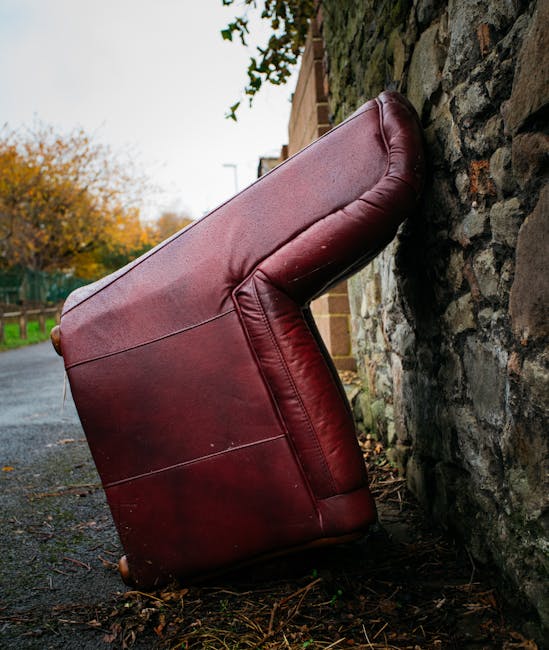
St Helier Bulky Waste Removals: Fees & Solutions
Posted on 02/06/2026
St Helier Bulky Waste Removals: Fees & Solutions
If you have a sofa blocking the hall, a broken wardrobe in the spare room, or a mattress that has been leaning against the wall for far too long, you are probably not looking for theory. You want a clear answer: what does St Helier Bulky Waste Removals: Fees & Solutions actually cost, and what is the easiest way to get it done without turning your day upside down?
That is what this guide is for. We will break down the main disposal options, the factors that shape pricing, the practical steps that make collection smoother, and the mistakes that can lead to extra charges or unnecessary stress. If you are clearing one item or a full room's worth of bulky waste, the right approach can save time, money, and a fair amount of faff. To be fair, bulky waste rarely arrives one item at a time; it tends to show up all at once, usually at the worst possible moment.
You will also find a useful comparison table, a simple checklist, and a realistic example so you can decide which solution fits your situation best. And yes, we will keep the language plain. No jargon for the sake of it.
Quick expert summary: the cheapest bulky waste solution is not always the best value. In St Helier, the smartest choice is usually the one that balances collection fees, access, item type, lifting effort, and recycling or disposal needs. If you are moving house or decluttering, pairing bulky waste removal with good decluttering habits for movers can reduce both cost and stress.

Why St Helier Bulky Waste Removals: Fees & Solutions Matters
Bulky waste sounds simple until you try to move it. A table can be awkward. A chest of drawers can catch on a stair rail. A freezer, once unplugged, becomes heavy in a very unhelpful way. In a busy area like St Helier, the challenge is not just getting rid of unwanted items. It is doing it safely, legally, and at a price that makes sense.
This matters for a few reasons. First, bulky waste often appears during life changes: moving out, renovating, downsizing, replacing furniture, or clearing a property after a tenancy ends. Second, the item itself may be too large for normal household waste services. Third, access can be tricky. Narrow entrances, tight stairwells, limited parking, and shared buildings all affect how the job is done and what it costs.
There is also a sustainability angle. Many bulky items can be reused, repaired, or recycled in part, but only if they are sorted sensibly. That is why people increasingly want removal solutions that include responsible handling rather than simple haul-away service. If you are already planning a larger move, it often helps to align the process with recycling and sustainability guidance so less ends up being wasted.
In practical terms, the right bulky waste solution helps you protect your back, protect your schedule, and avoid ending up with a half-cleared room at 9pm on a weekday. Been there, nobody enjoys that scene.
How St Helier Bulky Waste Removals: Fees & Solutions Works
Most bulky waste removals follow a fairly straightforward process, but the details matter. The fee is usually shaped by what needs removing, how much labour is involved, and how easy it is to reach the items. Some providers quote by load size. Others price by item, time, or a mix of both. The exact model can vary, so it is worth asking how the quote is built before you agree to anything.
In a typical job, the process looks like this:
- Assessment: You list the items, share photos if possible, and describe access conditions such as stairs, parking, or lift use.
- Quotation: A price is given based on item size, volume, weight, access, and any specialist handling needed.
- Collection planning: A time window is arranged. If the job is urgent, you may be offered a same-day option, depending on availability.
- Removal: The team loads the items, taking care around walls, doors, flooring, and shared areas.
- Sorting and disposal: Items are separated where possible for reuse, recycling, or disposal in line with good practice.
Fees are influenced by more than size alone. A sofa on the ground floor with clear access is a very different job from an office cabinet on the third floor with no lift and a tight turn at the bottom of the stairs. That is just life, really.
If the bulky waste is part of a wider move, it can be useful to look at broader removal services in St Helier so you can coordinate clearance and transport in one plan rather than juggling several small jobs.
Key Benefits and Practical Advantages
The obvious benefit is that bulky items disappear. But the real value goes a bit deeper than that.
- Less physical strain: Moving heavy or awkward waste yourself can be risky, especially on stairs or in cramped rooms.
- Faster turnaround: A skilled team can usually clear a room much more quickly than a DIY attempt with borrowed transport.
- Cleaner property handover: This matters for landlords, tenants, sellers, and anyone trying to finish a renovation cleanly.
- Better item handling: Framed mirrors, white goods, mattresses, and solid wood furniture all need different handling.
- More sensible disposal: A professional approach makes recycling and reuse more likely when items are suitable.
There is also a mental benefit. Once the bulky items are gone, the room suddenly feels bigger. The air changes a bit. Sounds odd, but you notice it immediately. The corner that felt blocked all week becomes usable again, and the job starts to feel finished.
For many households, especially during a move, bulky waste removal also reduces decision fatigue. Instead of wondering whether the old bed will fit in the van, or whether the broken freezer can be left until later, you get a clean next step. If you are juggling packing too, packing and boxes support in St Helier can help keep the wider move on track.
Who This Is For and When It Makes Sense
Bulky waste removal is not only for people doing a full house clearance. In fact, a lot of requests are smaller and more specific. You might need it if you are:
- replacing a sofa, mattress, or wardrobe;
- clearing out a rental property before move-out;
- emptying a loft, garage, or storage space;
- removing old office furniture after a refit;
- disposing of white goods that are too heavy to shift safely;
- dealing with a last-minute clearance before an inspection or sale;
- preparing for renovations and need the rooms emptied first.
It also makes sense when the item is simply too awkward for one person. A bed base with no handles is a classic example. So is a large freezer tucked into a tight utility room. If you have ever tried to turn one of those things around a corner, you already know why people call for help.
Some people try to manage by themselves. That can work for light, simple items, but heavy waste often calls for more than good intentions. A useful read here is solo lifting techniques for heavy items, although for genuinely bulky objects, the safer answer is often not to lift alone at all.
If your bulky waste is part of a student move, flat clear-out, or family relocation, it may be more efficient to combine it with student removals in St Helier or flat removals in St Helier rather than treating it as a separate, stand-alone task.
Step-by-Step Guidance
Here is a practical way to handle bulky waste removal without making it harder than it needs to be.
- List every item clearly. Write down what is going, including approximate size and whether it is dismantled.
- Check condition honestly. Some items are reusable, others are only fit for disposal. That distinction affects the solution.
- Take a few photos. One wide shot and one close-up are usually enough for a sensible quote.
- Measure access points. Doors, stair widths, hall turns, and lift dimensions can make a big difference.
- Separate any loose parts. Shelves, cushions, drawers, and cords should be removed where safe to do so.
- Decide what needs specialist handling. Fridges, pianos, and certain large appliances may need extra care. A good example is the caution around DIY piano moving; heavy, valuable, or delicate items are not the place to improvise.
- Ask how disposal is managed. If recycling or donation pathways are available, ask whether they apply to your items.
- Book a realistic time slot. Leave enough space for access, parking, and any moving-out admin.
A small but useful tip: clear the path before the crew arrives. A hallway with shoes, plant pots, and three laundry baskets in it slows everything down. Sometimes the problem is not the sofa, it is the umbrella stand next to the sofa. Funny old thing.
If your bulky waste removal is happening during a wider house move, you may also find targeted packing tips helpful, because the best clear-out jobs usually start with knowing what stays and what goes.
Expert Tips for Better Results
After enough clear-outs, a pattern emerges. The jobs that go smoothly tend to share the same habits.
- Get the sorting done first. Do not wait until the collection time to decide whether the cabinet is staying or leaving.
- Photograph awkward access points. Tight corners and basement steps are easier to plan for when the team can see them in advance.
- Be clear about item condition. A wet mattress or a damaged appliance may need different handling from a standard sofa.
- Keep valuables and paperwork separate. It sounds obvious, but little things get swept up in clear-outs all the time.
- Bundle the job if possible. One larger, well-planned collection can be more efficient than several rushed mini-jobs.
One thing people forget: bulky waste is not only about weight. Shape matters too. A light but oversized item can be harder to move than a heavy compact one. That is why experienced crews spend a lot of time on positioning, not just lifting. The lift is only half the job.
If you are trying to reduce overall moving stress, a calm plan helps a lot. This is where stress-free moving techniques can make a noticeable difference, especially when the removal overlaps with key deadlines.
And if there is a bulky appliance involved, such as a freezer, it is worth reading how to store a freezer safely before you decide whether to move, store, or dispose of it.

Common Mistakes to Avoid
Most problems in bulky waste removal come from assumptions. A few common ones are worth calling out.
- Underestimating size or weight: "It only looks big" is not a measurement. It usually ends in frustration.
- Forgetting access issues: A narrow stairwell, no parking, or a shared entrance can change the whole job.
- Leaving sorting too late: If the crew has to wait while you decide what to keep, the job can drag on.
- Not checking what the quote includes: Some fees cover labour and disposal; others may not include certain item types.
- Trying to move hazardous or fragile items without advice: Old electronics, sharp broken furniture, and similar items deserve more care.
- Assuming all waste is the same: Reusable furniture, recyclables, and general waste are not handled in the same way.
A less obvious mistake is booking at the last minute without thinking about parking or lift access. That one is particularly common in busy parts of St Helier. If access is a bit awkward, planning ahead is everything. A useful related read is the St Helier estate moving guide for narrow lanes and access, because the same access logic often applies to bulky removals.
And yes, there is a mild human truth here: if you rush the clear-out, you usually end up paying for it one way or another. Time, money, or a sore shoulder. Sometimes all three.
Tools, Resources and Recommendations
You do not need a warehouse full of equipment to manage bulky waste well, but a few tools and habits make the work far easier.
- Measuring tape: Useful for checking doorways, stairs, and item dimensions before booking.
- Work gloves: Better grip, less risk from sharp edges or dusty surfaces.
- Furniture blankets or protective covers: Helpful where items must pass through tight spaces.
- Basic screwdriver or hex key set: Often needed to dismantle bed frames or shelving.
- Labels or tape: Handy for marking what is staying, what is going, and what needs to be kept aside.
For items that are still usable, think about whether they should be separated for resale, donation, or reuse before you call them waste. That can reduce the amount needing disposal and may simplify the collection. If furniture still has a bit of life in it, sofa storage and care advice can sometimes help you decide whether to keep, store, or replace a piece.
If you are preparing a larger clear-out, it also helps to plan the room in stages. Start with the most awkward items first. Then move to smaller waste. Strange as it sounds, momentum matters. Once the biggest piece is gone, the rest often feels easier.
Where a bulky waste job is part of a wider relocation, it can be worth reviewing removal services in St Helier and the company's pricing and quotes approach so you can understand the overall value, not just the headline number.
Law, Compliance, Standards, or Best Practice
Bulky waste handling should be taken seriously. Even when the job looks simple, disposal still has to be managed with care and in line with accepted UK practice. The key point is this: do not assume that leaving items by a boundary wall, in a communal area, or near a bin store is automatically acceptable. It may not be.
Responsible removal means keeping pathways clear, reducing trip hazards, and handling waste through a proper collection or disposal route. It also means avoiding fly-tipping risks. If waste is left in the wrong place, the person arranging it may still be responsible for the mess. That is a headache nobody wants.
Good practice also includes:
- being honest about what the items are and whether they contain hazards;
- sorting items where possible so reusable materials are not mixed with general waste unnecessarily;
- using safe lifting methods and suitable equipment;
- taking care in shared buildings, especially where other residents need access;
- checking that the provider's policies on safety, payment, and complaints are clear before booking.
If you want reassurance around operating standards, it is reasonable to review the company's own published information on health and safety, insurance and safety, and terms and conditions. Those pages do not just tick boxes; they tell you how a business thinks about risk, responsibility, and customer care.
For readers who are comparing providers carefully, it is also worth checking how complaints are handled and how payments are secured. Not glamorous, granted, but very useful.
Options, Methods, or Comparison Table
There is more than one way to handle bulky waste in St Helier. The best method depends on the item, your timeline, and how much labour you want to avoid.
| Option | Best for | Typical strengths | Possible drawbacks |
|---|---|---|---|
| DIY disposal with your own vehicle | Very small loads, manageable items | Can be cheaper if you already have transport | Heavy lifting, access issues, time-consuming, disposal logistics can be awkward |
| Scheduled bulky waste collection | Planned clear-outs with flexible timing | Simple to arrange, predictable planning | May not suit urgent jobs or awkward access |
| Professional removal team | Large, heavy, delicate, or awkward items | Fast, safer, more convenient, better for stairs and tight spaces | Usually costs more than doing it yourself |
| Combined move-and-clear service | House moves, flat moves, office clear-outs | One coordinated plan, less duplication, less disruption | Needs early planning to get the timing right |
If your bulky waste comes from a home move, the combined option is often the most efficient. You can coordinate it with house removals in St Helier or office removals in St Helier, depending on the property type.
For smaller or more flexible moves, a man and van option in St Helier or a removal van may be enough. The trick is choosing the right-sized solution, not automatically the largest one.
Case Study or Real-World Example
Here is a realistic example from a typical St Helier property clearance.
A couple in a first-floor flat needed to remove a three-seat sofa, a double mattress, a broken chest of drawers, and an old fridge freezer before their final handover. The entrance was narrow, the stairwell curved slightly, and there was no convenient parking directly outside. On paper, none of this was dramatic. In practice, it was exactly the kind of job that can become awkward if you improvise.
They started by listing the items, taking a few photos, and checking which pieces could be dismantled. The drawers were removed, the bed frame was broken down, and the route to the door was cleared the night before. They also checked where the vehicle could stop, which saved time on collection day. Nothing fancy. Just sensible preparation.
The useful part was not only the removal itself but the sequencing. The team loaded the heaviest items first, protected the walls on the narrowest turns, and made a decision on the fridge based on its condition and handling needs. The flat was left ready for cleaning, and the couple could focus on the final move instead of spending a Saturday arguing with a mattress in the corridor. It happens more often than people admit.
If you are in a similar position, combining clearance with pre-move cleaning can make the final handover much smoother. A cleared room is much easier to clean properly, obviously, but it is surprising how often that gets overlooked.
Practical Checklist
Use this checklist before booking bulky waste removal in St Helier.
- List every item to be removed.
- Note approximate size, weight, and condition.
- Take photos from a few angles.
- Measure doors, stairs, lifts, and tight corners.
- Clear pathways and remove loose items.
- Separate anything you want to keep, donate, or store.
- Check whether any item needs specialist handling.
- Ask what is included in the fee.
- Confirm access details and parking arrangements.
- Review safety, payment, and complaints information before you book.
If you are still deciding what to keep, it can help to read practical decluttering techniques for movers so the bulky waste list is shorter by the time removal day arrives.
Important note: the more clearly you prepare, the fewer surprises there are in the quote. That is true almost every time.
Get a free quote today and see how much you can save.
Conclusion
St Helier bulky waste removal is really about making a difficult job manageable. The right solution depends on the item, the access, the timing, and how much effort you want to put into sorting and lifting. Fees are not just about size; they are shaped by labour, loading difficulty, urgency, and disposal requirements.
If you plan ahead, ask sensible questions, and choose the method that fits the job rather than just the cheapest-looking option, the process becomes far easier. That is the whole game. A good bulky waste plan removes more than furniture or broken appliances. It removes the drag from your week.
And once the room is clear, the space feels lighter. You notice it the moment you walk back in. Sometimes that little bit of order is exactly what you needed.